

Explore the barracks
Step back in time to discover early colonial Sydney. Designed for Stage 2 students (Years 3–4) aligning with the NSW HSIE K–6 Syllabus, this virtual exploration encourages young historians to investigate primary sources, examine real archaeological finds, and uncover stories etched into the walls of Hyde Park Barracks.
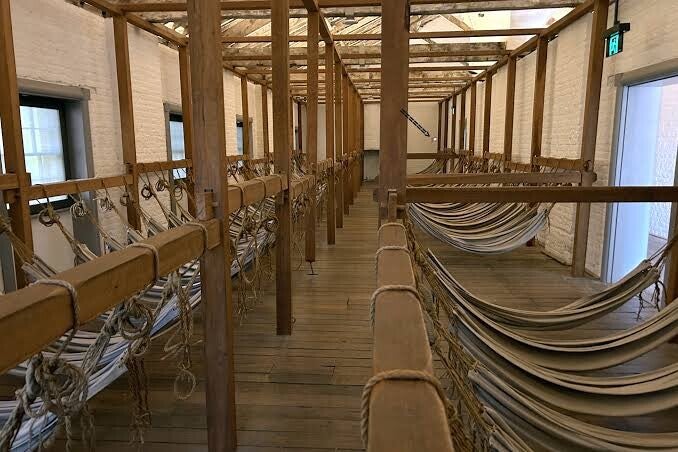
Stop 1: Inside Convict Sleeping Quarters
Imagine arriving at Hyde Park Barracks in the 1820s. After a long day of work, you step into a large room lined with rows of hammocks. Here, you will sleep beside many other convicts.
Learning intention: We are learning to use historical evidence to investigate living conditions in colonial Sydney.
Look closely at the photograph of the reconstructed sleeping quarters.
1. Observe: Identify three things you notice about the room.
2. Imagine: How do you think it might have felt to sleep in this space? Explain why.
3. Compare: Describe two ways these sleeping arrangements differ from your bedroom today.
Write your observations in your History Detective Journal.
Hammock Mystery
Archaeologists found pieces of hammock material under the floorboards at Hyde Park Barracks.
Your challenge: What does this object reveal about how convicts slept? Support your answer with evidence from the object.

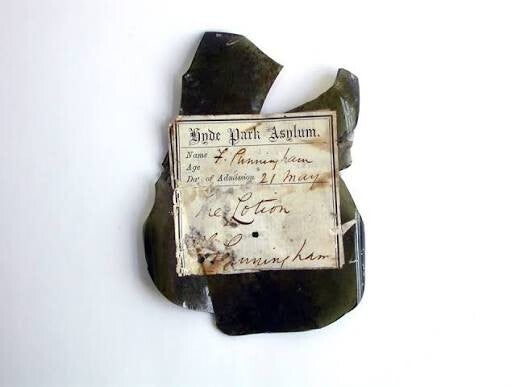
Stop 2: Secrets Beneath the Floorboards
Did you know archaeologists found thousands of historical objects under the floorboards at Hyde Park Barracks?
Archaeologists found pieces of clothing, shoes, and personal belongings that offer clues about the people who once lived here.
Your mission: Become an archaeologist. Examine historical objects and find out what they reveal about everyday life in colonial Sydney.
Archaeologist's Challenge
Choose one historical object to investigate.
1. Observe: What is the object made of? Describe what it looks like.
2. Infer: Who might have used this object and why?
3. Investigate: What does this object show about life in the past?
Write your findings in your History Detective Journal.
Why Are Archaeologists Important at Hyde Park Barracks?
Archaeologists carefully studied objects found at Hyde Park Barracks to uncover clues about the people who once lived and worked there. Discoveries like clothing fragments, shoes, and personal belongings help us understand daily life in colonial Sydney.
Without archaeologists, many of these hidden stories may never have been found!
Think about: Why can an old shoe or piece of clothing tell us something a history book cannot?
Your Archaeological Dig!
It's time to be a real history detective!
Your Mission:
1. Click the button below to start your archaeological dig.
2. Choose your tools and carefully uncover hidden artefacts.
3. Find out what objects are buried beneath the surface.
4. Write down one object you found in your History Detective Journal.
Think about: Why must archaeologists be careful when uncovering historical objects?

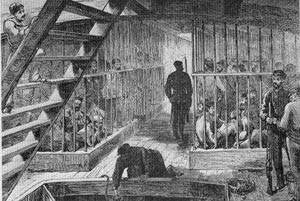
Stop 3: A Day in the Life of a Convict
What was daily life like for convicts living at Hyde Park Barracks?
Imagine waking up in a crowded dormitory in the 1820s. Instead of going to school, you get ready for a long day of work.
Male convicts at Hyde Park Barracks followed strict routines. They worked during the day and returned to the Barracks to eat, sleep, and prepare for the next day.
Your mission: Investigate the daily routines, responsibilities, and challenges faced by convicts living at Hyde Park Barracks.
History Detective Challenge: My Convict Diary
You have travelled back in time to Hyde Park Barracks in the 1820s.
Using what you have learned, imagine you are a convict describing your day.
Complete these diary prompts in your History Detective Journal.
- Morning: I woke up at the Barracks and…
- Afternoon: Today I was sent to work…
- Evening: When I returned to the Barracks…
- Reflection: The most difficult part of my day was…
Detective rule: Include at least two historical facts from the museum resource to support your diary entry.

Think Like a Historian:
How does learning about a convict’s daily routine help us understand life in colonial Sydney?
Remember: Your diary is an imagined account, but historians use real evidence to interpret the past.
Stop 4: The Barracks Through Time
How has Hyde Park Barracks changed over the years?
Hyde Park Barracks has stood in Sydney since 1819, but its purpose has changed over time.
Originally built for male convicts, the building later housed immigrant women and became a women’s asylum. Today, Hyde Park Barracks is a museum where visitors explore stories from Australia’s past.
Your mission: Become a time traveller and find out what has changed and what has stayed the same at Hyde Park Barracks.
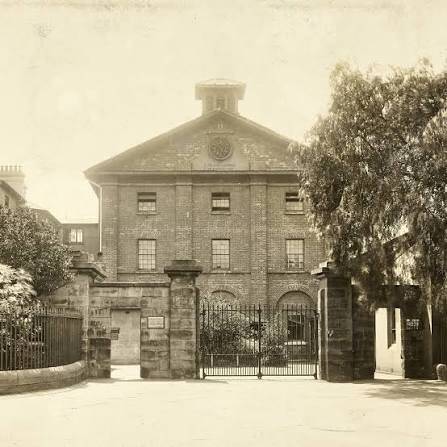

Look closely at the historical and modern images of Hyde Park Barracks.
Your Challenge:
1. Spot the differences: Find two things that have changed.
2. Find the similarities: Identify one feature that has stayed the same.
3. Think deeper: Why do you think the building has been kept?
Write your discoveries in your History Detective Journal.
History Detective Question: How can photographs and historical images help us understand how things change over time?
Explore the Hyde Park Barracks timeline to see how the building’s purpose has changed.
As you explore, find out:
- What was the Barracks first built for?
- Who lived at the Barracks after the convict era?
- What is the building used for today?
Your mission: Create a mini timeline showing three important moments in the history of Hyde Park Barracks.
Your Final Detective Clue!
You have explored sleeping quarters, investigated archaeological finds, learned about convict life, and discovered how Hyde Park Barracks has changed.
Think about: What is the most important thing Hyde Park Barracks has taught you about life in colonial Sydney?
Keep your History Detective Journal ready. You’ll need your evidence for the final challenge!